01Mix dry ice and alcohol
Prepare the preservation setup.
Before collection, dry ice and alcohol were prepared in the cooler so each specimen could be preserved immediately after retrieval from the mud.
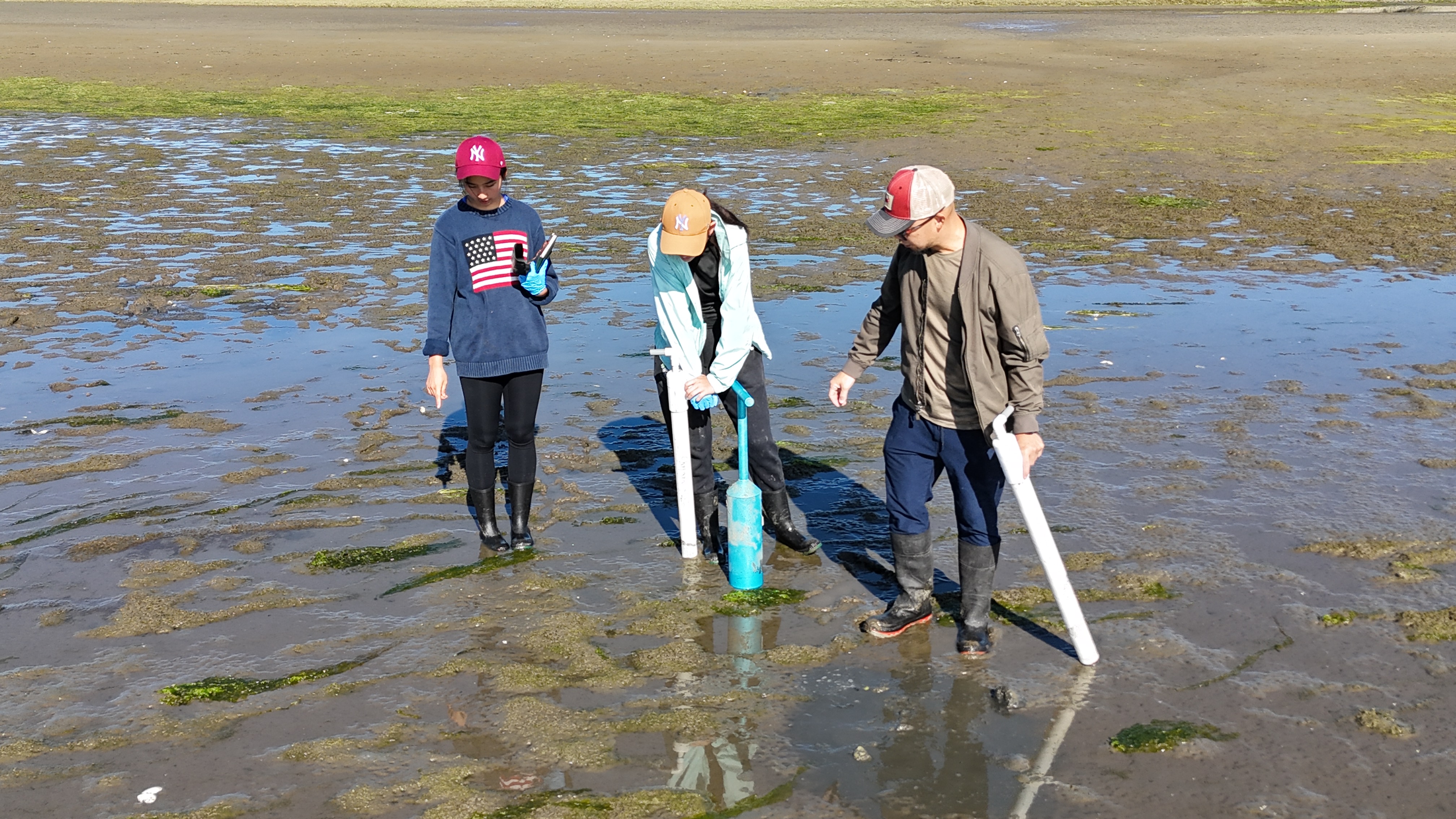
Oregon · Summer 2026
Investigating how parasite infection may be associated with the gut microbiome of Oregon's Upogebia mud shrimp.
Explore the researchThe research question
Our project compares the gut microbiomes of parasite-infected and uninfected Upogebia. We want to investigate whether infection is associated with differences in the microbial community and generate evidence for future research.
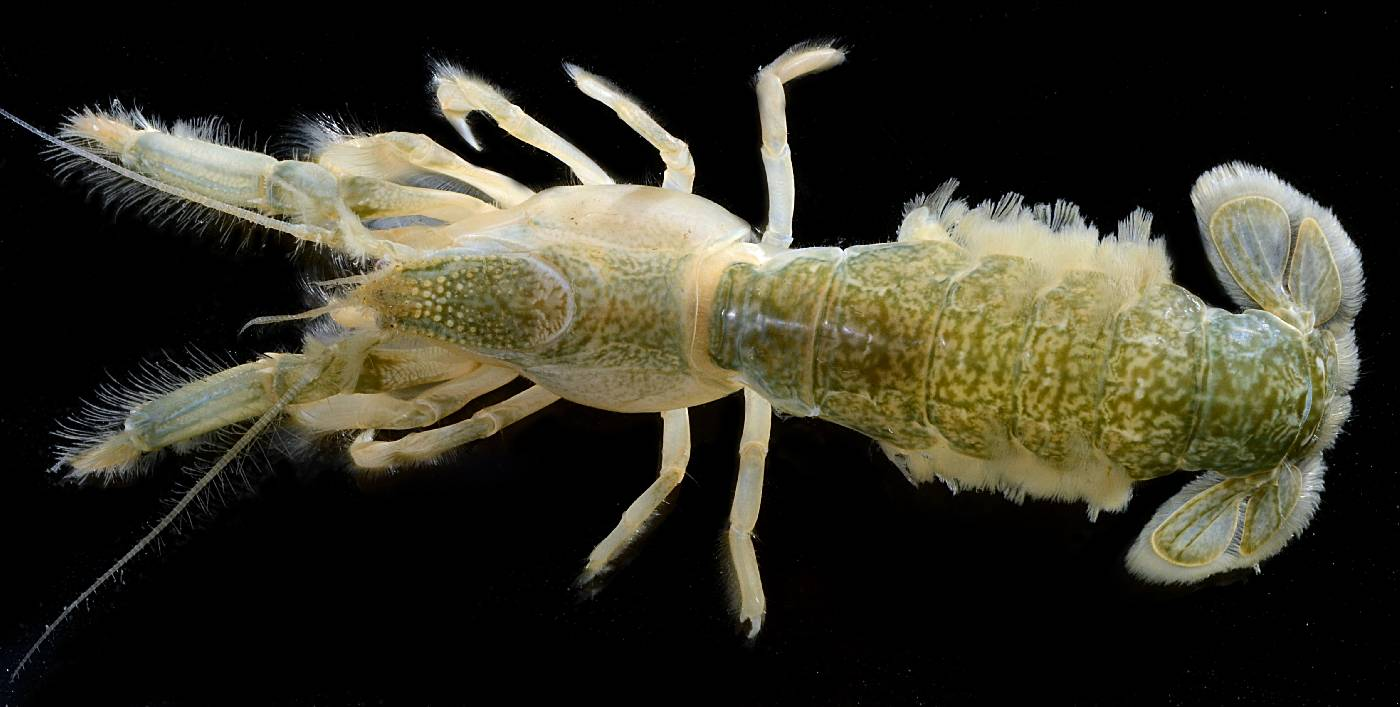
The species
Upogebia are mud shrimp that live in branching, Y-shaped burrows. Their movement through sediment makes them bioturbators, meaning they continually disturb and rework the sediment around their burrows. They are considered a keystone species in their estuarine habitat.
The parasite
Orthione griffenis
Orthione griffenis is a parasitic isopod that infects Upogebia. The parasite has no natural predators and weakens its host over time.
Whether infection is associated with differences in gut microbial composition remains the central question of this project. Results are pending sequencing.
Oregon fieldwork
Follow our actual collection process from preparation to specimen storage.
Phase I · 7 steps
01Mix dry ice and alcohol
Before collection, dry ice and alcohol were prepared in the cooler so each specimen could be preserved immediately after retrieval from the mud.
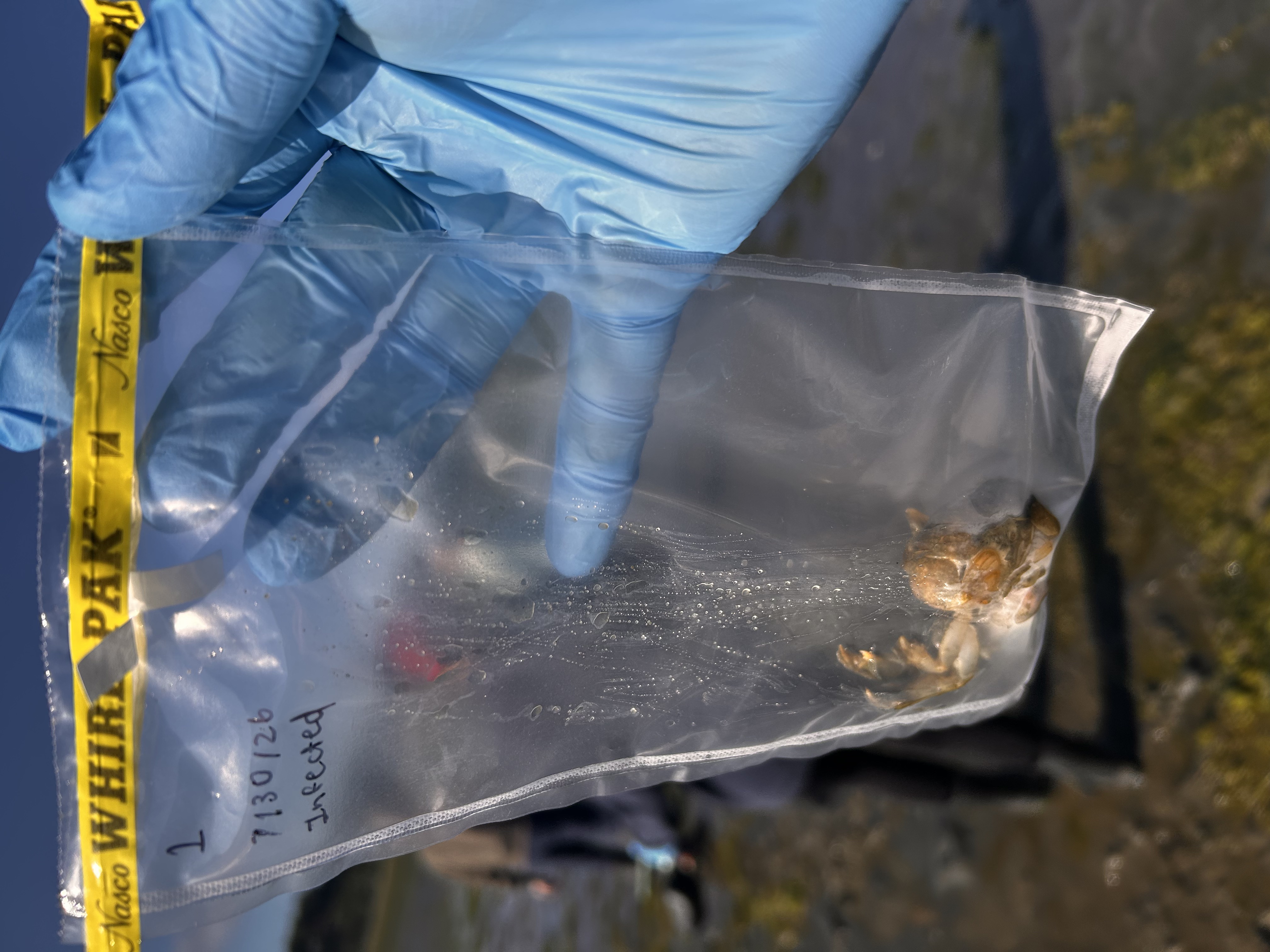
02Label plastic bags
Each specimen bag was labeled so the shrimp could remain identifiable throughout the collection and processing workflow.
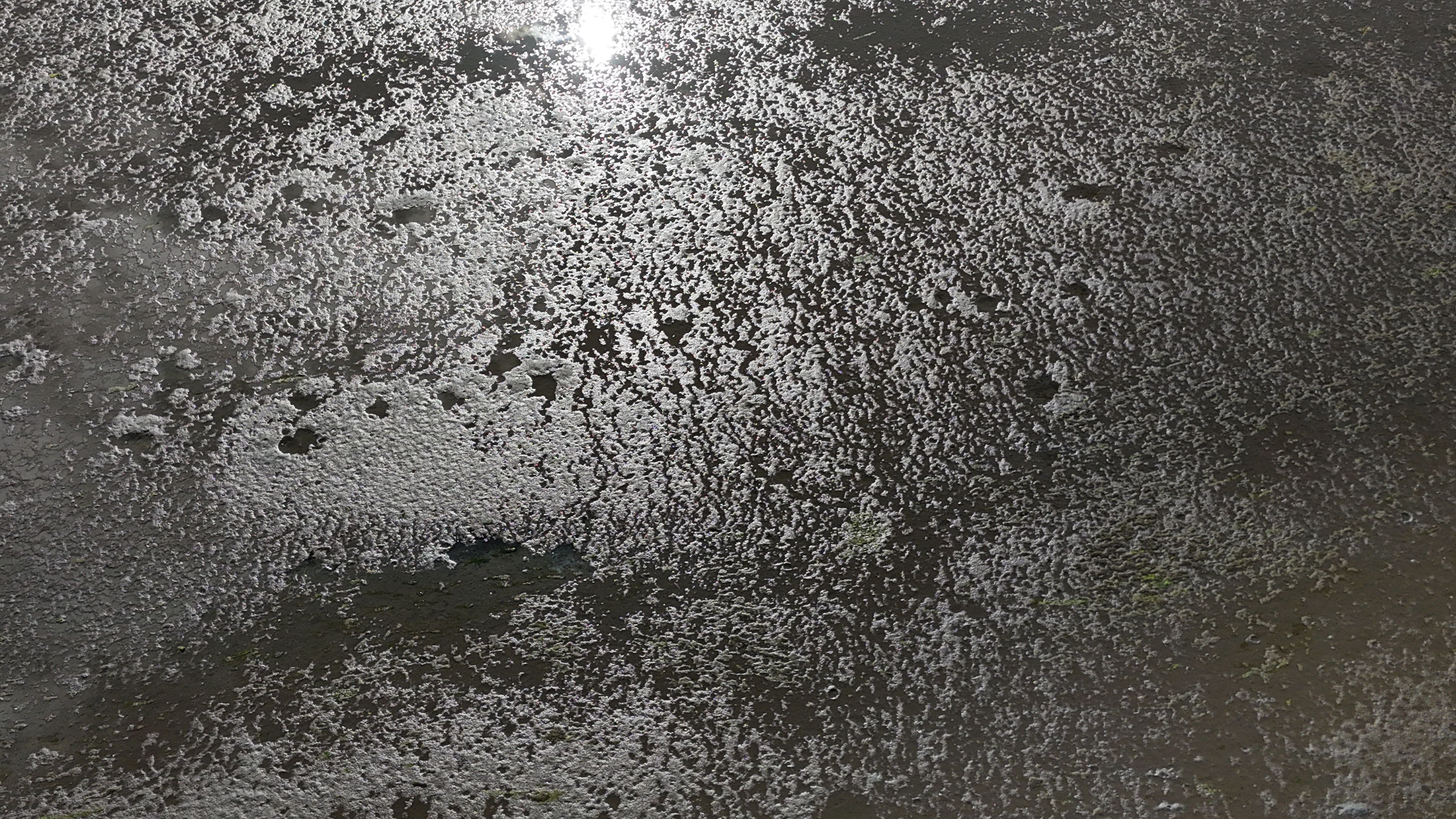
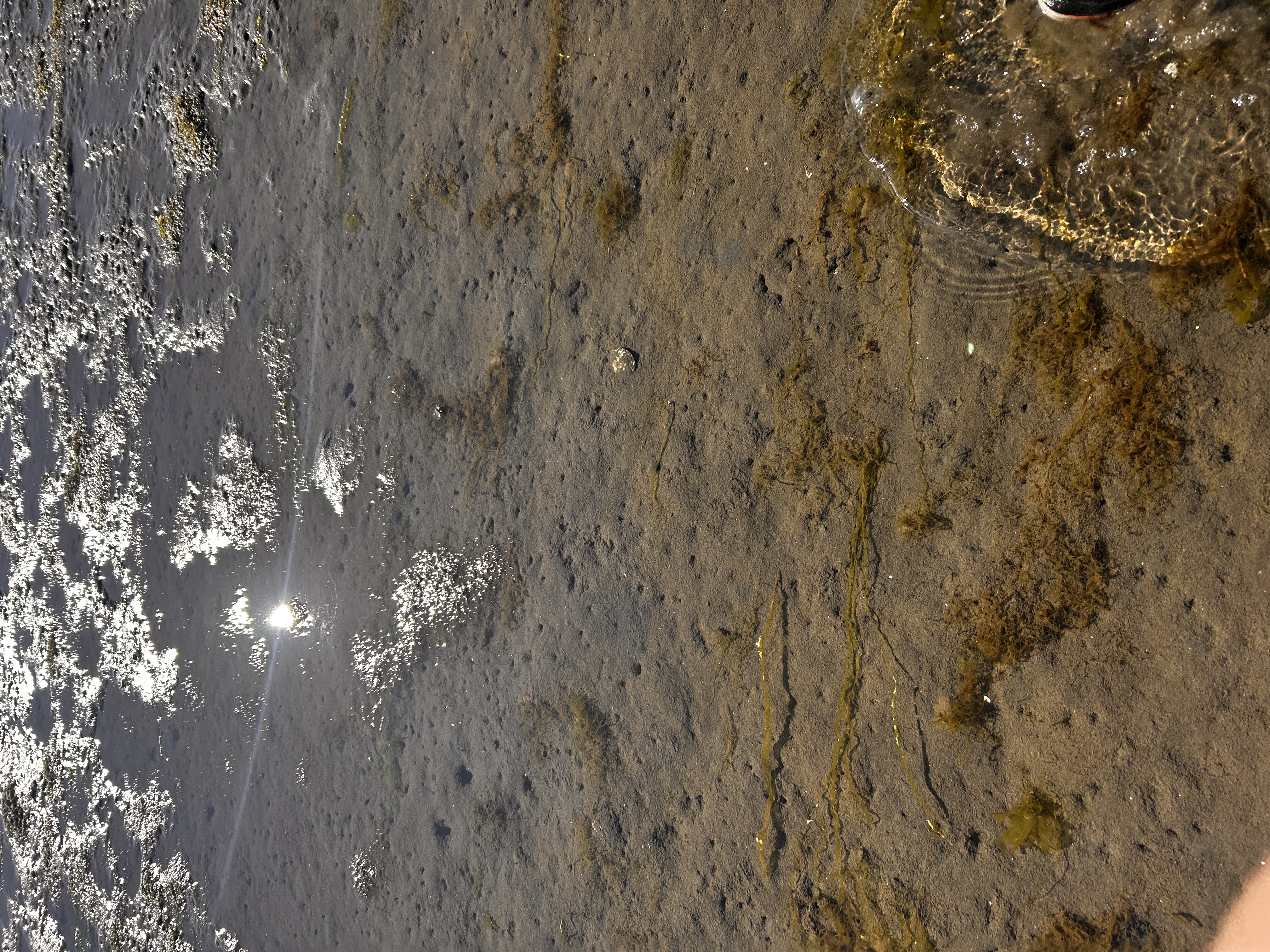
03Find Upogebia burrows
Upogebia live in branching, Y-shaped burrows. We first identified the burrow openings in the mudflat before attempting collection.
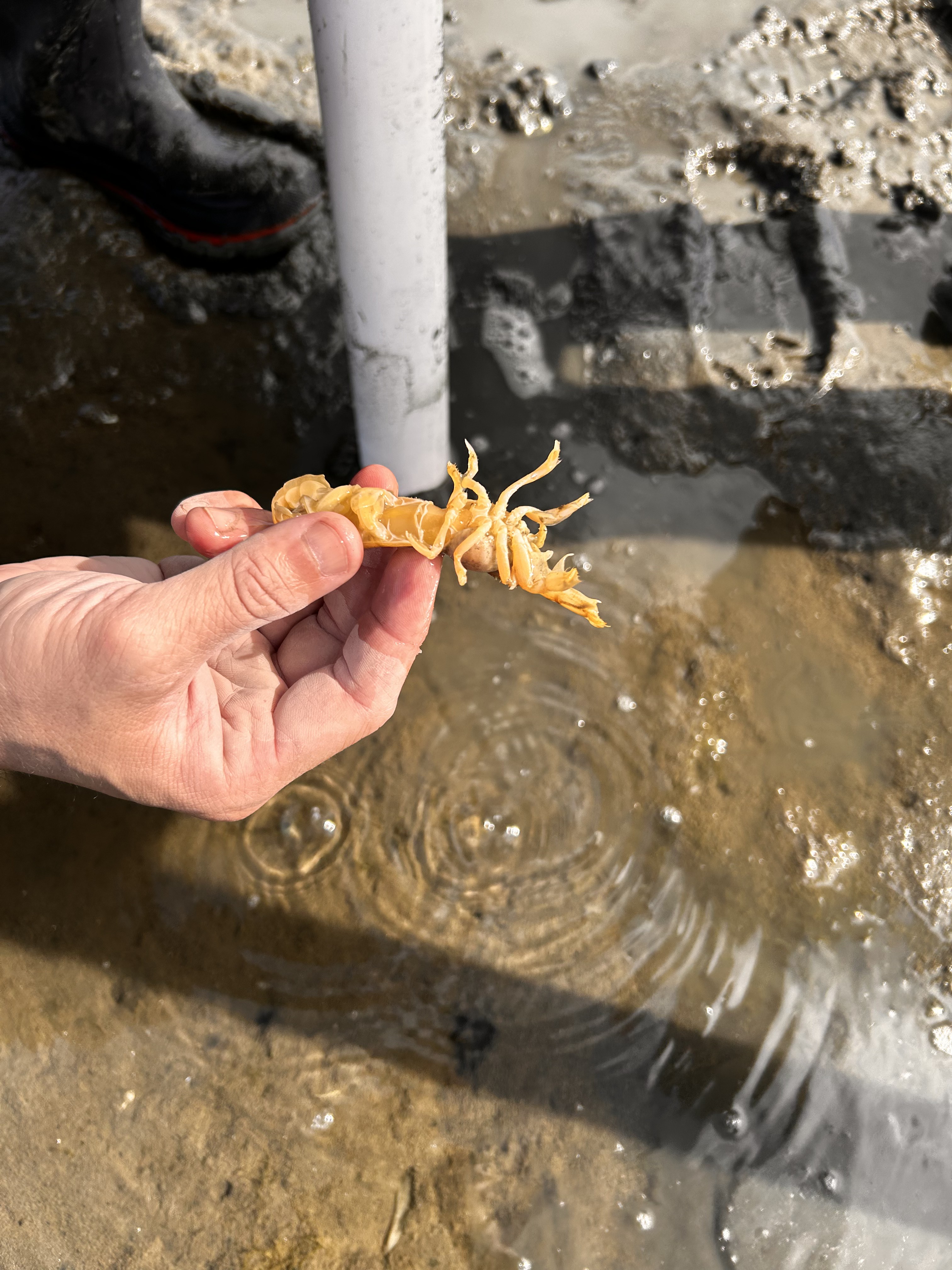
04Retrieve Upogebia
We used a clam gun at the burrow to retrieve Upogebia from the sediment.
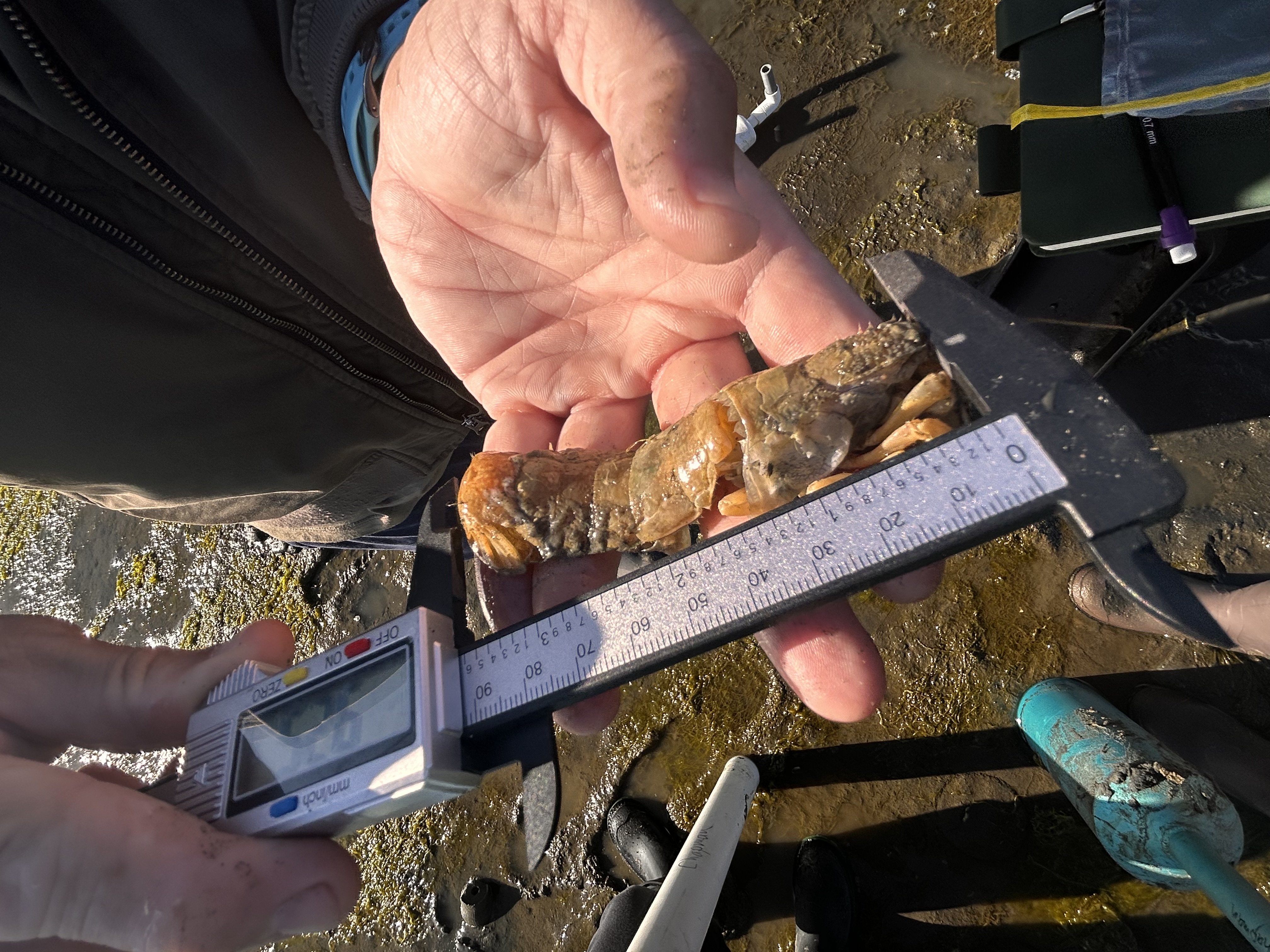
05Record measurements
Each collected shrimp was measured and its data recorded directly in the field notebook alongside its ID.
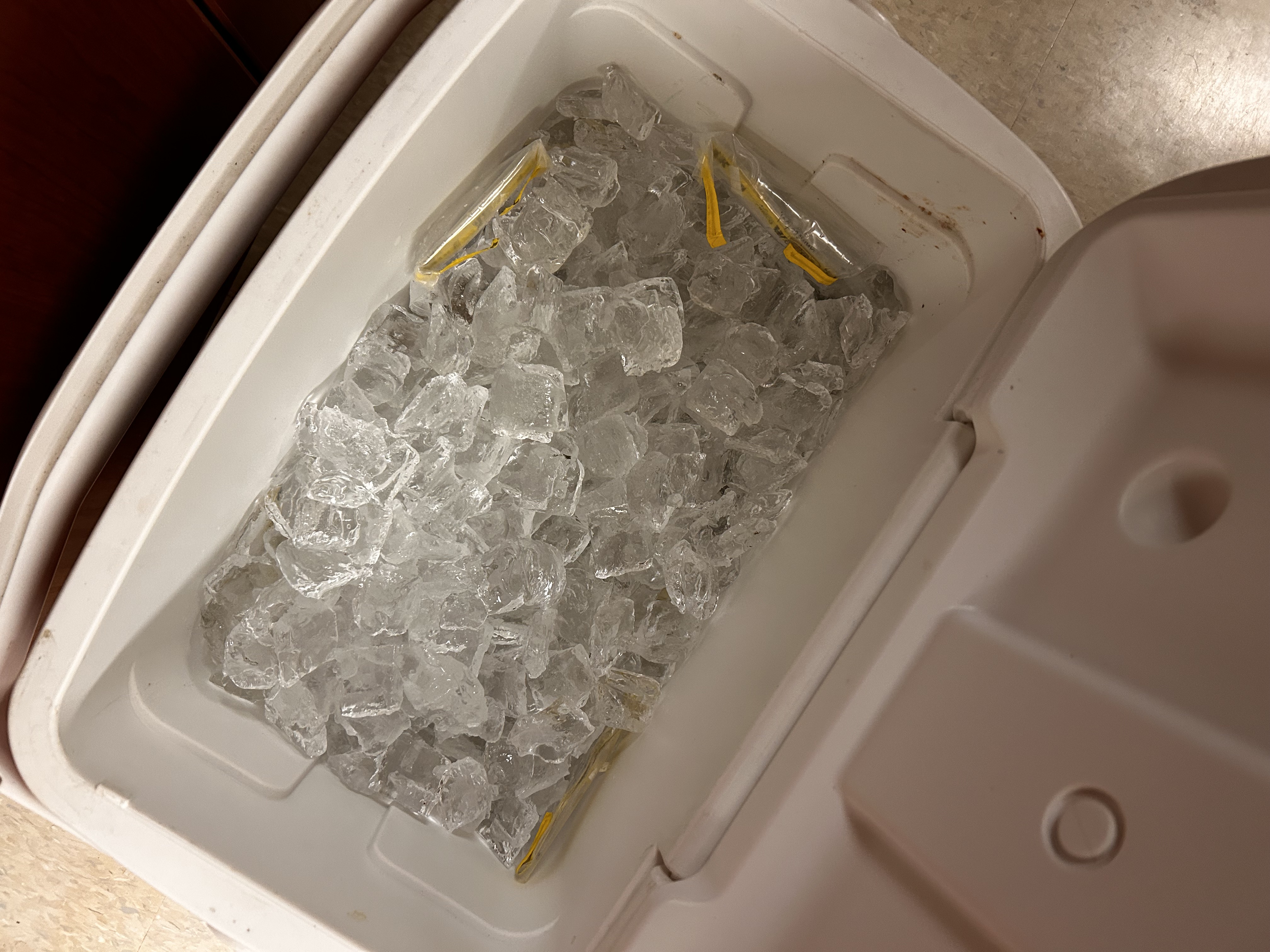
06Store Upogebia
Collected specimens were kept organized and preserved for transport and later processing.
07Clean sandy equipment
After collection, sandy equipment was cleaned before leaving the fieldwork stage.
Phase II · 7 steps
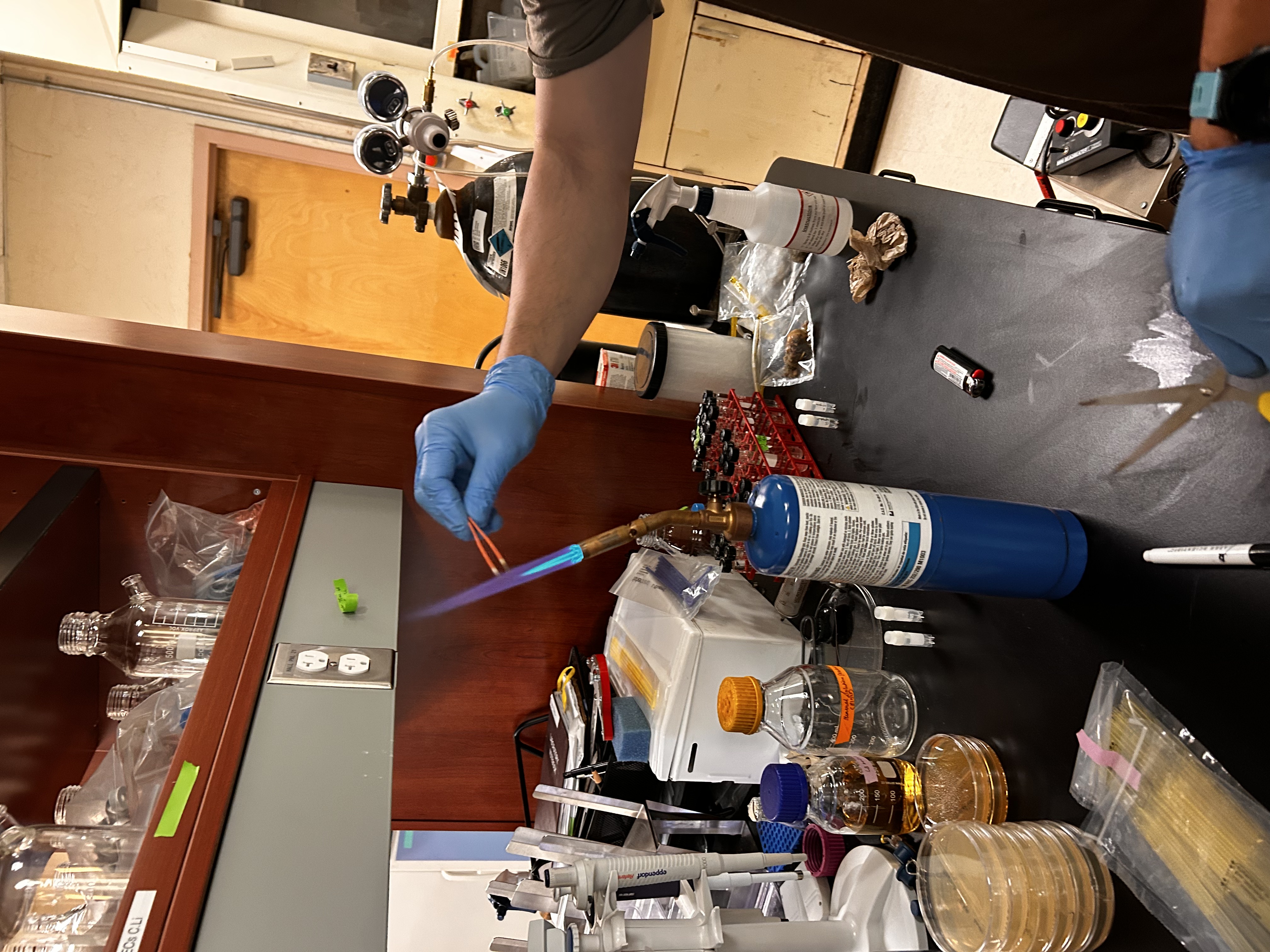
L01Disinfect equipment
Equipment was disinfected before processing specimens to reduce contamination between samples.
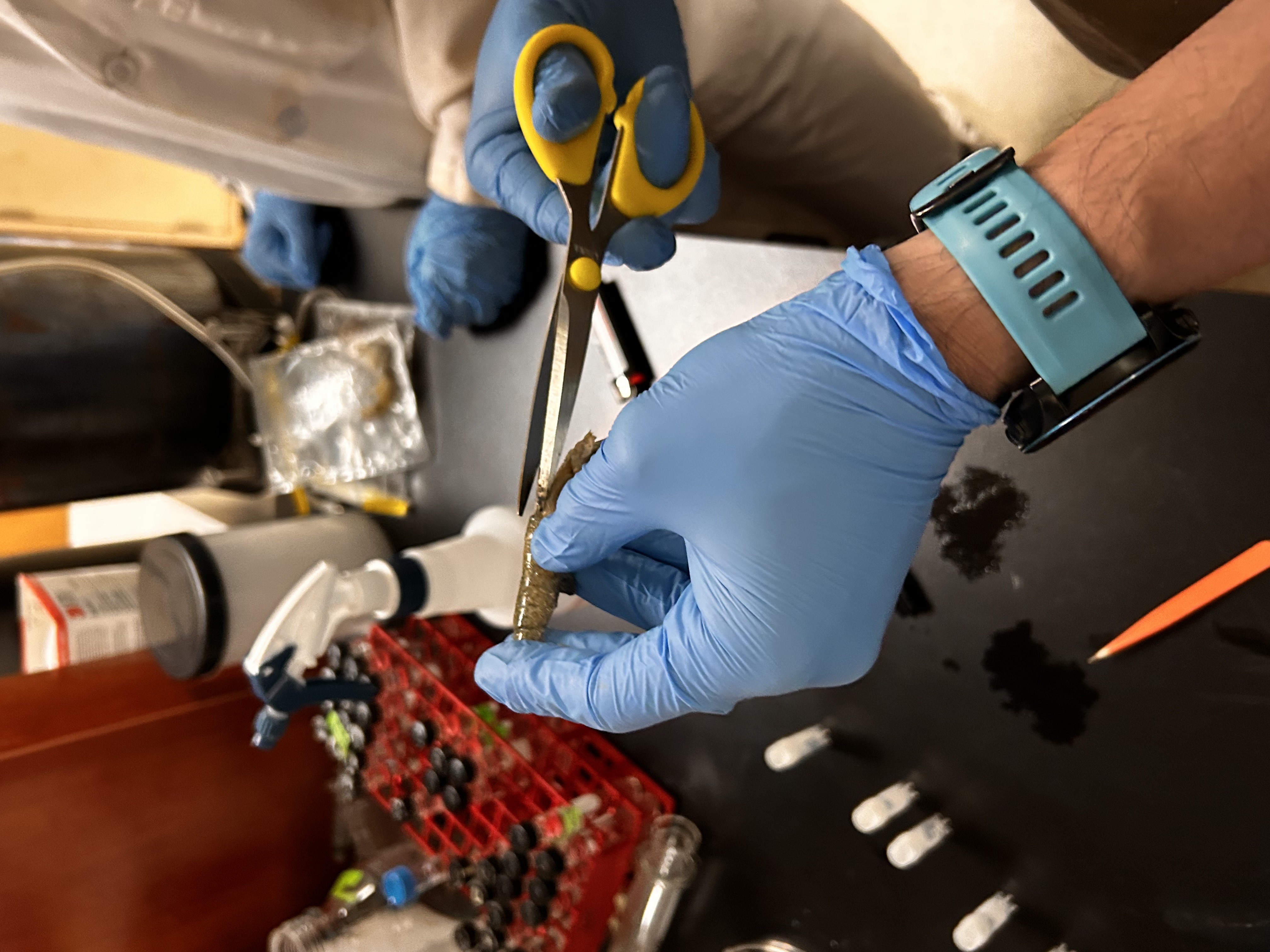
L02Cut shrimp shell
The shrimp was opened carefully to access the gut for extraction.
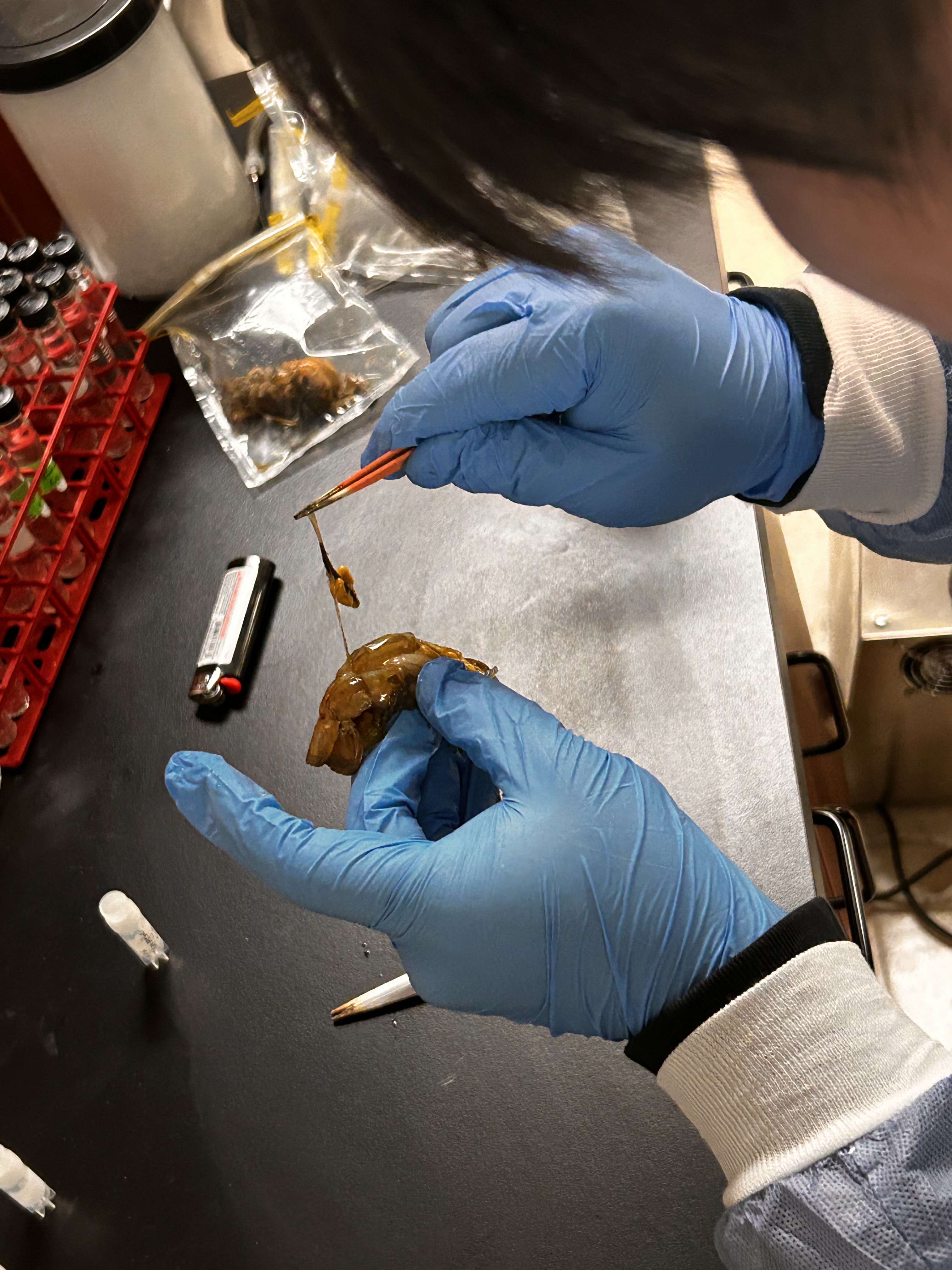
L03Extract gut
The gut was carefully removed from each specimen for microbiome analysis.
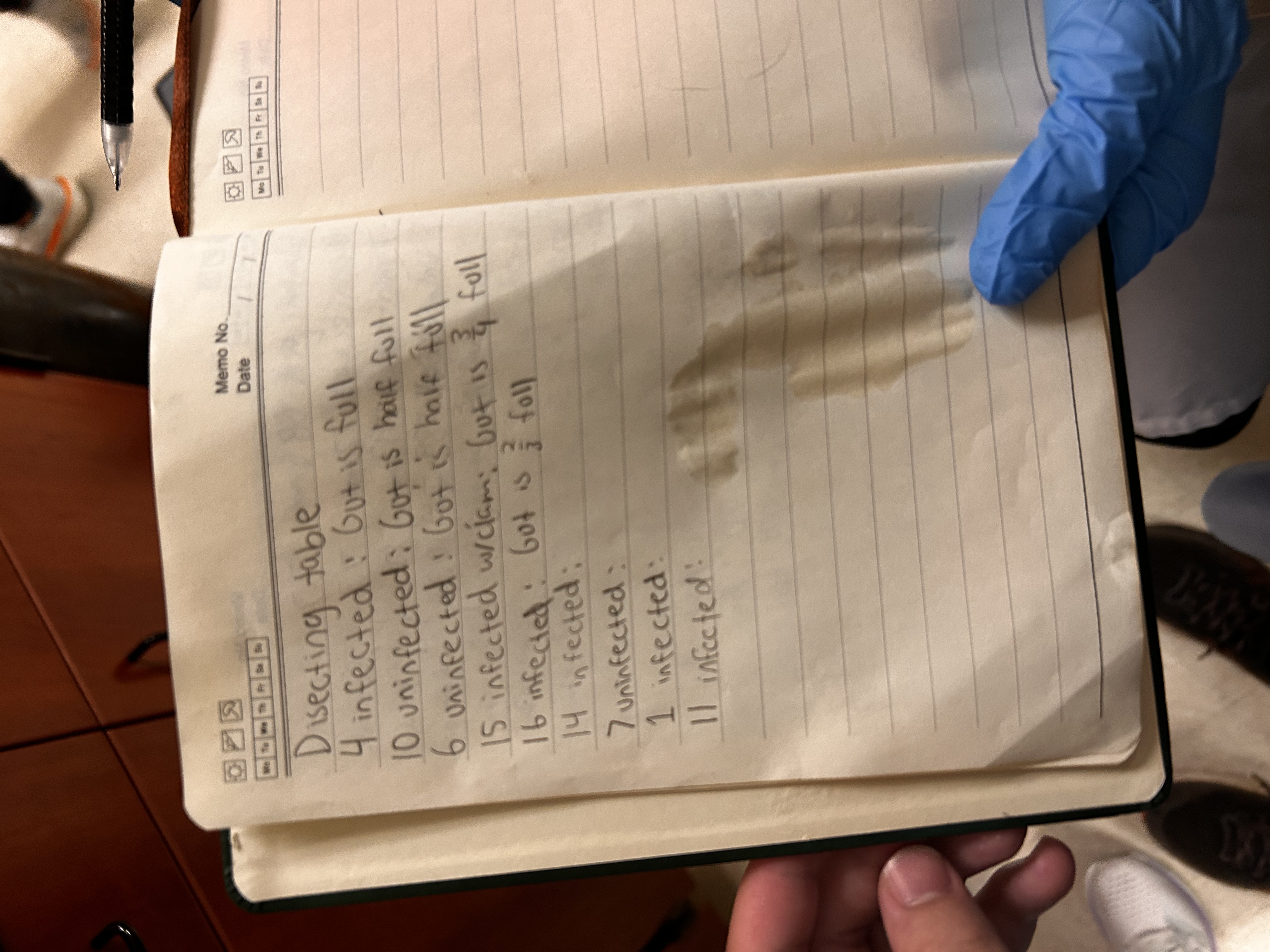
L04Record data
Observations were recorded alongside each specimen's ID, including variables documented in our dataset.
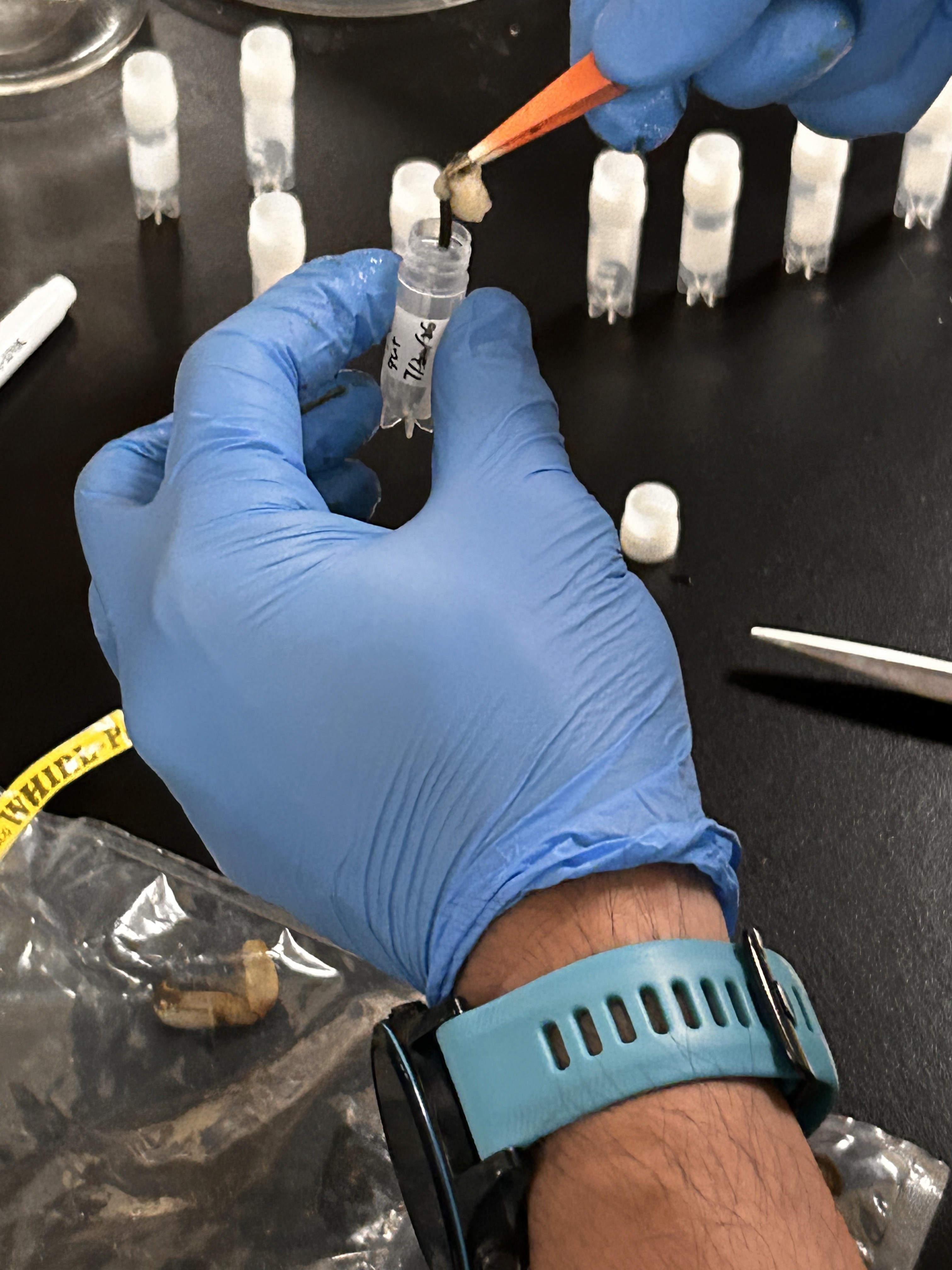
L05Place gut in test tube
The labeled tube preserved the connection between the gut sample and its specimen ID.
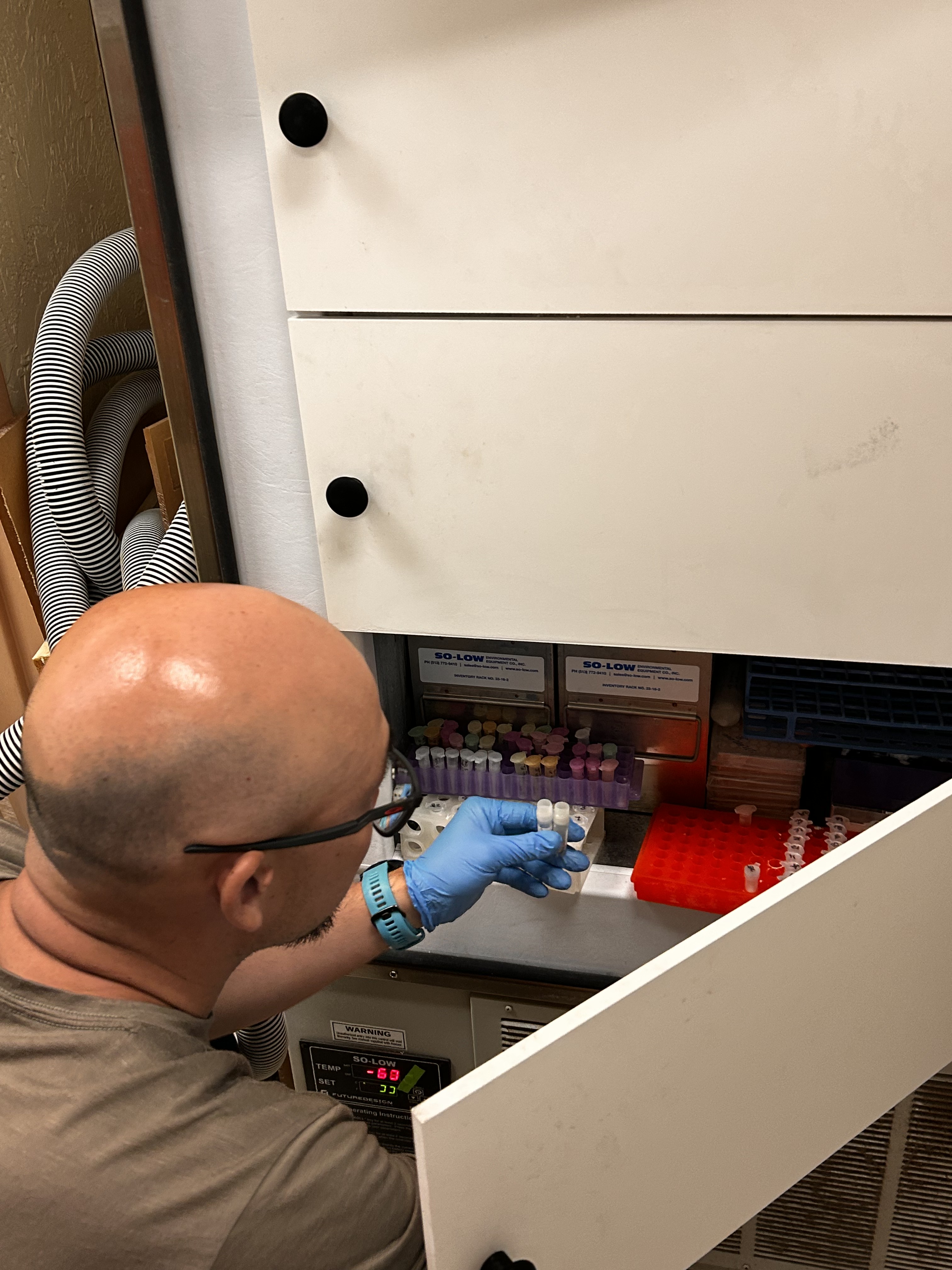
L06Ultra-low-temperature storage
The labeled gut samples were placed in the laboratory's ultra-low-temperature freezer for storage before further analysis.
L07Clean workspace
The workspace and equipment were cleaned to prepare for the next sample and reduce cross-contamination.
Next phase
Sequencing in progress · Results pending
Methods overview
Completed
Next phase
Sequencing / analysis pending
Results pending
Shotgun metagenomic sequencing will allow us to investigate microbial composition and diversity in infected and uninfected Upogebia gut samples.
Results pending
Project resources
The field team
Project leader
Field documentation
Collection & preservation
Oregon Upogebia Microbiome Project · 2026